Lab-Grown Meat: A Straight-Talk Guide to What It Is, Who's Selling It, and What It Actually Means - Part 1
Written by Arbitrage • 2026-08-20 00:00:00
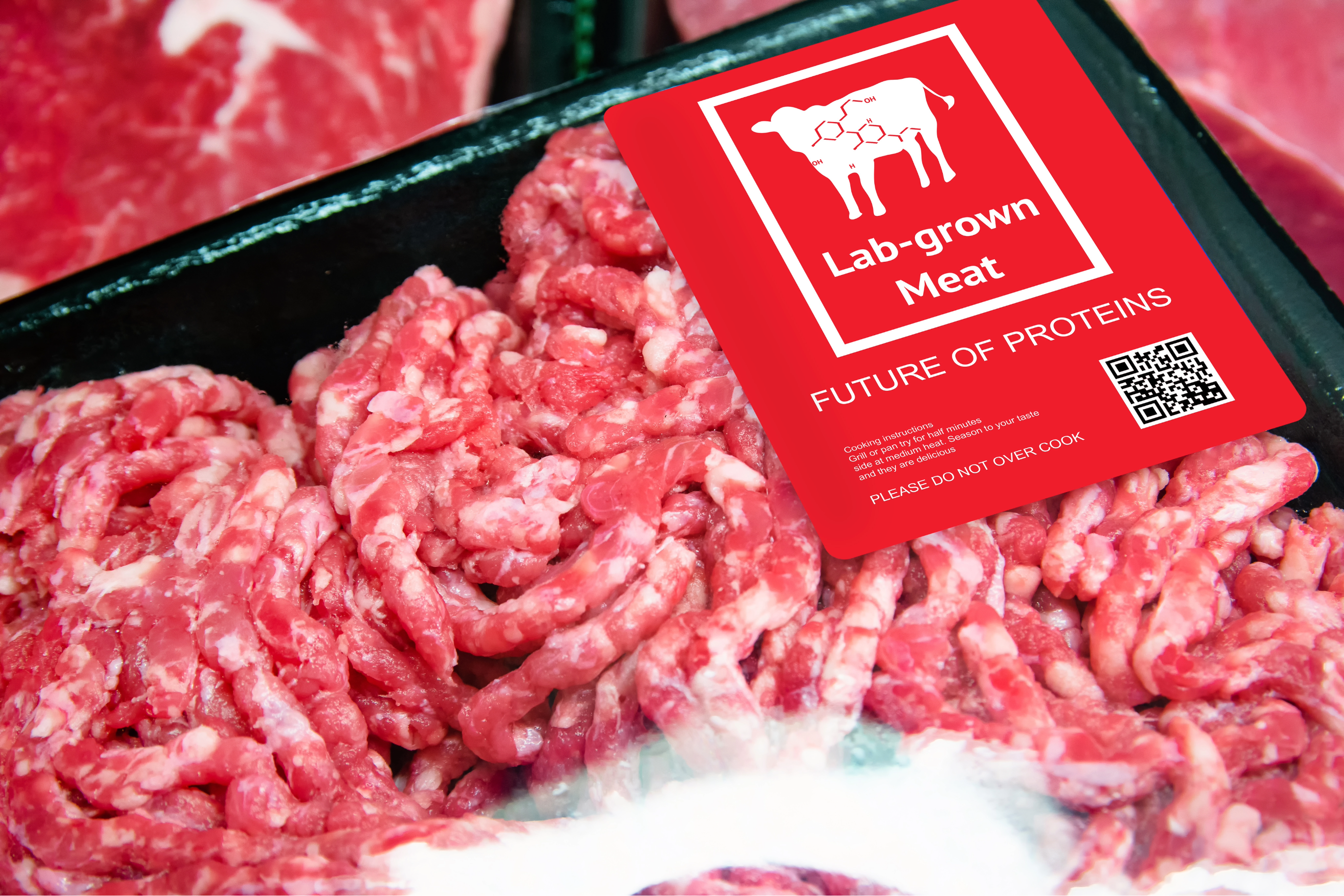
The technology works. Regulators approved it. Seven states banned it. And you almost certainly can't buy it. That's the state of cultivated meat right now, and it's a lot weirder than the headlines suggest. Here's what you actually need to know, including how to spot these products on a label, whether you're seeking them out or steering clear.
First: the vocabulary is doing a lot of work. This industry has been careful about language, and it's worth understanding why. Because "lab-grown" tested poorly with consumers, the terms that replaced it are softer and, frankly, vaguer.
| Term | What it Means | Worth Knowing |
| cultivated / cell-cultivated | real animal tissue grown from cells in a bioreactor | industry-preferred; sounds agricultural, like "cultivated land" |
| cell-cultured | real animal tissue grown from cells in a bioreactor | the other USDA-accepted term |
| cultured | real animal tissue grown from cells in a bioreactor | borrows warmth from yogurt and cheese |
| lab-grown | real animal tissue grown from cells in a bioreactor | the plain-language version; industry avoids it |
| cellular agriculture | the broader field | sounds like farming; it's biotech |
| slaughter-free / harvest-free | marketing claim | verify it (see the fetal bovine serum issue below) |
The good news for label-readers: the USDA's Food Safety and Inspection Service (FSIS) - the agency that inspects meat and poultry and approves their labels - requires the product name to state "cell-cultivated" or "cell-cultured" before the meat name, in the same size, color, and font style as the rest of the name, in a single color on a contrasting background, on the front panel and in the ingredients statement. Every one of these labels gets individually reviewed by FSIS; they don't qualify for the generic approval most conventional meat receives.
The catch is that FSIS still hasn't finalized its labeling rule. And this only covers USDA-regulated meat and poultry. Cultivated seafood falls under the FDA, where terms are more flexible. Wildtype's salmon, for instance, isn't under USDA jurisdiction at all. Don't assume "cultivated" describes the whole product. Mission Barns's meatballs are a pea protein base combined with cultivated pork fat. Read the full ingredient list.
Where can you actually buy it? Short answer: almost nowhere.
| Company | Product | Where | Status |
| Wildtype | Coho Salmon | restaurants in OR, CA, WA, NY | the most available product |
| Mission Barns | pork fat (meatballs, bacon) | Fiorella, San Francisco, CA | also announced for Sprouts Farmers Market |
| Mission Barns | pork meatballs | Berkeley Bowl West, Berkeley, CA | first retail sale worldwide - one day, Nov 1 2025, $13.99/8, one pack per customer |
| UPSIDE Foods | chicken | Bar Crenn, SF (2023) | no mass-market product |
| GOOD Meat | chicken | China Chilcano, DC (2023) | no mass-market product |
| Believer Meats | chicken | not yet retail | 200,000 sq ft NC plant, ~12,000 ton capacity |
Five products have cleared the joint FDA-USDA pathway. But cultivated meat is largely absent from grocery stores, and one legislative tracker reported that as of April 2026 it wasn't being produced for consumption or sale in the U.S. at all. At least one federally approved company shut down in late 2025. The bottleneck isn't due to approval right now. It's due to production cost and bioreactor capacity.
The scorecard
Health
Pros:
- Grown in a sterile, monitored environment, sidestepping slaughter-and-processing contamination routes
- Removes the routine antibiotic use built into much of conventional animal agriculture
- FDA holds these products to the same safety requirements as any other food it regulates
Cons:
- New products with no long-term population data
- Some products are blends. The nutrition profile follows the whole recipe, not the cultivated portion
- Growth media formulations vary by company and aren't transparent to consumers
Environment
This is the most oversold claim in the entire category. The research genuinely conflicts.
| Study | Finding |
| CE Delft (largest published assessment) | up to 70% fewer emissions than beef by 2030, assuming food-grade inputs and clean energy |
| Int'l Journal of Life Cycle Assessment (15+ companies) | low land use, lower nitrogen and air pollution; carbon substantially below beef, but energy-intensive, and vs. chicken/pork depends on the energy mix |
| UC Davis (peer-reviewed, ACS Food Sci & Tech, Dec 2024) | 4-25 times higher warming potential than retail beef using purified growth media |
Why they disagree: the growth media. UC Davis assumed pharmaceutical-grade inputs, which take roughly twenty times more energy to produce than food-grade. Whether the industry can make the jump from pharma-grade to food-grade is the entire ballgame. As one of the UC Davis authors put it, cultivated meat isn't inherently better for the environment because getting there requires significant technical advancement.
Come back tomorrow for Part 2 of this topic!