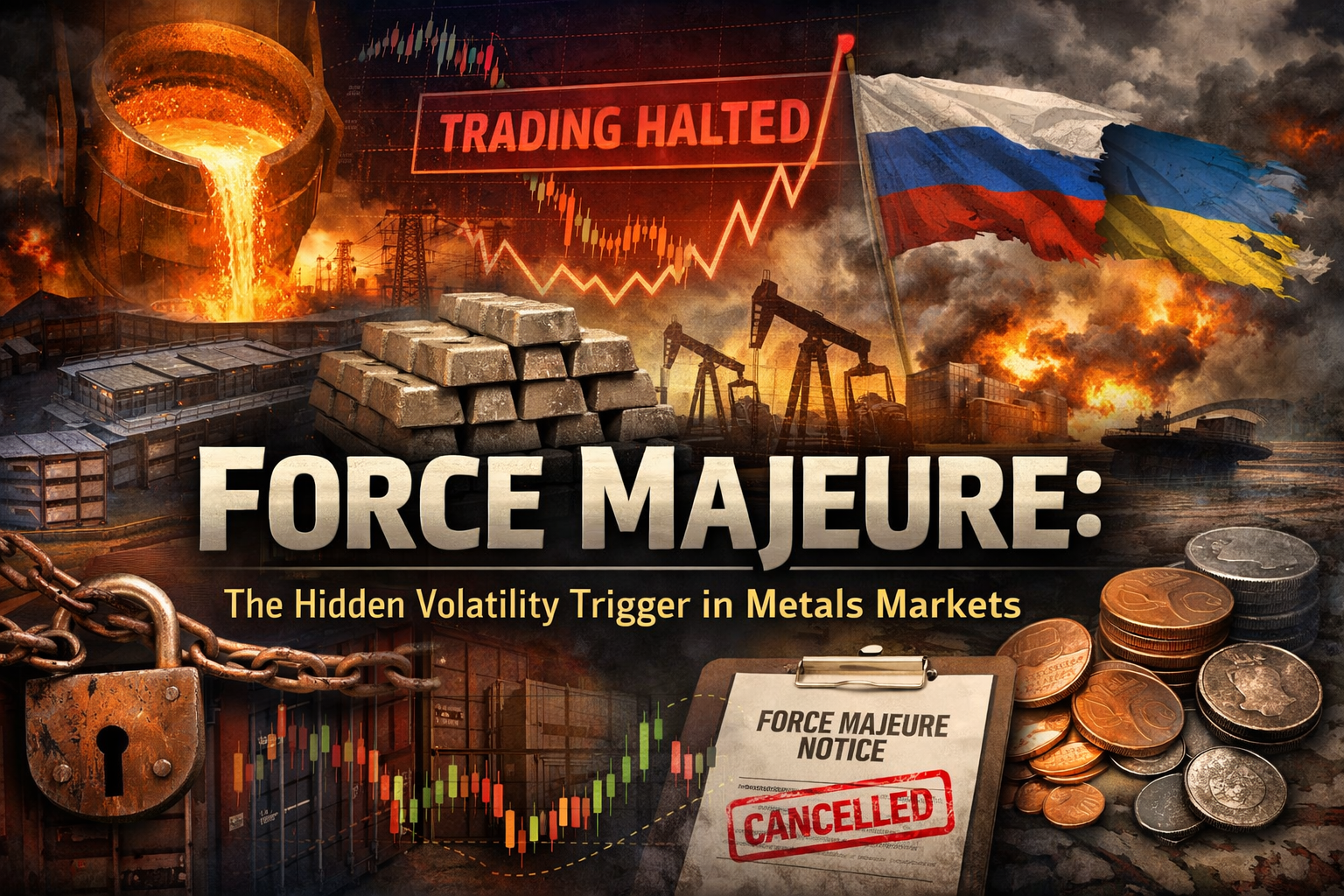
Force Majeure: The Hidden Volatility Trigger in Metals Markets, Part 2
Written by Arbitrage • 2026-01-08 00:00:00
If you have not read yesterday's blog post, please read it first before continuing here.
When force majeure becomes market-moving
Force majeure events rarely start as price events. Rather, they start as operational failures. A smelter loses power, a port closes, or a shipment is blocked by sanctions. At first, the market shrugs. Then delivery windows get missed. Inventory draws accelerate. Spreads widen and liquidity thins. Suddenly, price is no longer the question - settlement is. This is when volatility spikes: front-month contracts disconnect from deferred months, backwardation appears where it "shouldn't", basis trades blow out, and hedgers scramble to roll or offset risk.
The nickel crisis showed how quickly this transition can occur once delivery certainty disappears.
The exchange problem no one likes to talk about
Force majeure doesn't just test producers and buyers. It tests exchanges. Exchanges are built to enforce contracts, not improvise under stress. But metals markets force them to do both. The trade-off is brutal: enforce contracts strictly and risk systemic failure, or intervene and undermine market credibility. Once intervention occurs, participants start repricing not just supply - but rules. That repricing lingers far longer than the initial shock.
Why this matters to traders (even if you never take delivery)
Most traders will never stand for delivery. But that doesn't mean delivery doesn't matter. Force majeure risk shows up indirectly through violent spread behavior, liquidity gaps, failed technical levels, "unexplainable" moves against positioning, and correlation breakdowns.
Charts don't warn you when a smelter is about to shut down. Indicators don't price sanctions risk cleanly. By the time the move shows up technically, the real event has already happened.
The real lesson: markets price certainty, not supply
A common mistake is to think force majeure is about shortages. It's not. It's about certainty of performance. Markets can handle tight supply. Markets struggle when they don't know whether contracts will be honored as written. That's why force majeure events often feel disproportionate. The metal still exists, and the demand hasn't vanished. But confidence has. And once confidence is questioned, price discovery becomes disorderly.
Final Thought
Force majeure clauses are supposed to be boring. They sit in contracts - ignored, until they matter. But in metals markets, they are a reminder that futures are promises, promises rely on systems, and systems fail under stress. When that happens, volatility doesn't come from speculation; it comes from reality asserting itself. And that's the kind of risk no indicator can fully capture.