A New Era of Urban Delivery
Written by Arbitrage • 2026-04-07 00:00:00
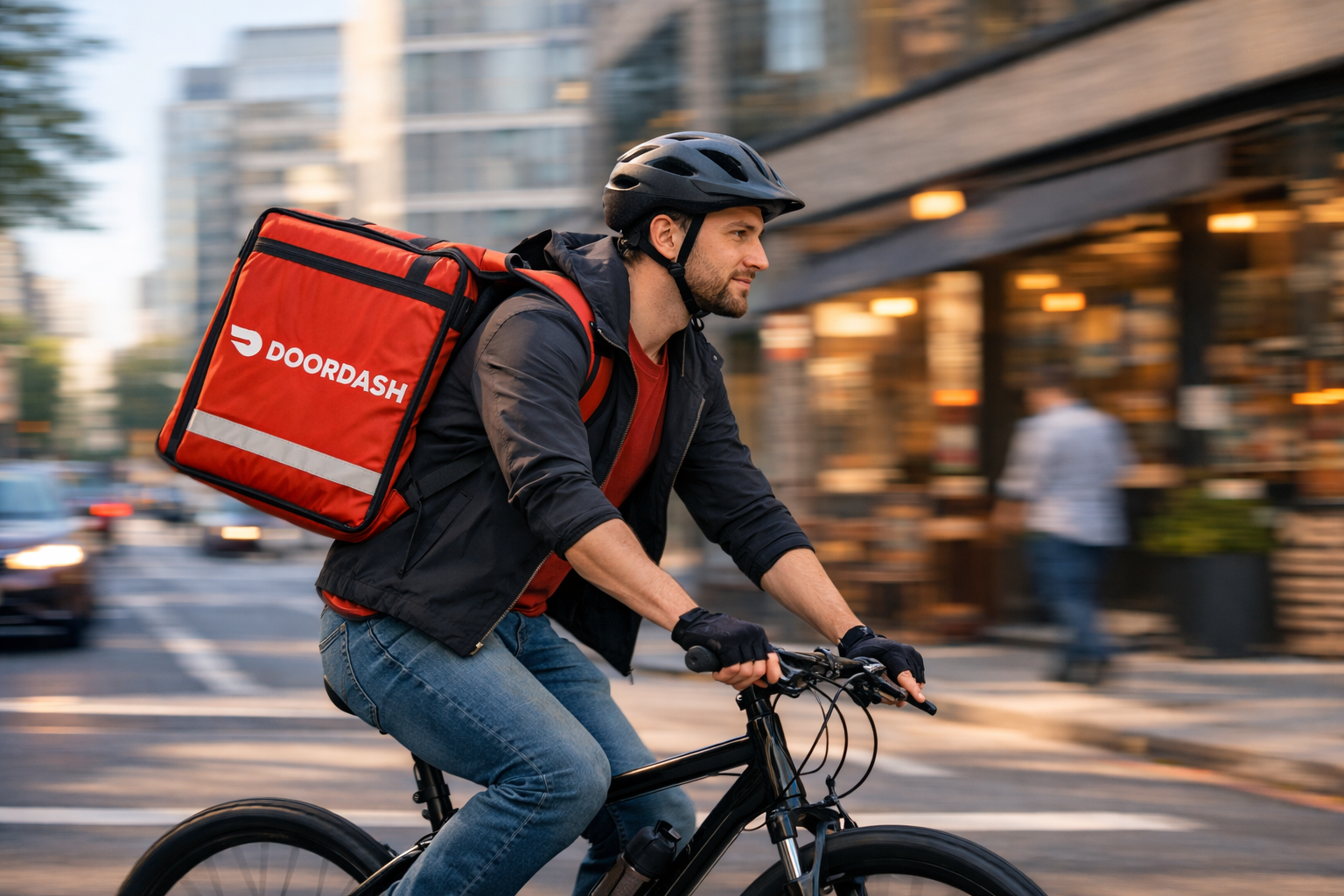
The image of a delivery driver weaving through traffic in a compact car is quickly being replaced by something far more agile. Across platforms like DoorDash and Uber Eats, the shift toward bikes, e-bikes, and scooters is not just anecdotal; it is reshaping the economics of last-mile delivery. The data shows a clear inflection point. According to a DoorDash report released earlier this year, deliveries made on two-wheeled vehicles in the U.S. and Canada grew nearly four times faster than car-based deliveries between 2024 and 2025. This builds on an already rapid expansion, with the share of two-wheeled deliveries tripling since 2022. In major urban centers, the shift is even more pronounced. Cities like San Francisco now see over half of deliveries completed via bikes or scooters, while places such as Philadelphia report roughly 35% of deliveries happening on two wheels. These numbers signal a structural change rather than a temporary trend.
One of the primary drivers behind this transition is simple unit economics. Delivery drivers operating bikes or scooters often earn more per hour than those using cars, largely because they eliminate major cost centers like fuel, insurance, and maintenance. DoorDash reports that two-wheeled couriers earn over 10% more per hour on average, while also completing deliveries faster due to reduced parking delays and shorter travel times. In dense cities where finding parking can add several minutes to each order, that efficiency compounds quickly.
Rising operational costs for car-based drivers are also accelerating the shift. With gas prices remaining volatile and vehicle maintenance costs climbing, many gig workers are seeing their margins compressed. Business Insider reported that while delivery demand has grown, earnings have not kept pace with costs. This forces drivers to work longer hours for barely modest gains. Two-wheeled transportation offers a way to stabilize income, making it particularly attractive for workers operating in high-density delivery zones.
Environmental considerations are also playing a growing role. Companies and cities alike are under increasing pressure to reduce emissions, and last-mile delivery is a visible target. DoorDash estimates that bike-based deliveries remove roughly 155,000 tons of carbon dioxide annually, underscoring the sustainability advantage of two-wheeled logistics. For platforms competing on both speed and environmental branding, promoting bike and e-bike delivery is a strategy that aligns operational efficiency with climate goals.
Technology has further accelerated the trend, particularly with the rise of electric bikes and scooters. E-bikes have transformed what is physically possible for delivery workers by extending range, increasing speed, and reducing fatigue. Research from Cornell University states that e-bike adoption in the United States is growing rapidly, with millions of units projected in the coming years, driven by both affordability and convenience. For delivery drivers, this means the ability to cover more ground without sacrificing efficiency, effectively blurring the line between traditional bicycles and motorized vehicles.
There are, however, trade-offs and challenges. Safety concerns remain significant, especially in cities where infrastructure has not kept pace with the surge in riders. In cities such as New York City, policy debates are intensifying where enforcement strategies around e-bike usage have shifted amid concerns about both worker protections and pedestrian safety. Delivery workers themselves often describe a balancing act between speed, safety, and platform expectations.
Despite these challenges, the trajectory is clear. Two-wheeled delivery is not just a niche adaptation; it is becoming a dominant mode in urban logistics. The convergence of better economics for drivers, improved infrastructure, environmental pressure, and technological innovation has created a reinforcing cycle that favors bikes and scooters over cars. As cities continue to densify and consumers demand faster, cheaper delivery, the competitive advantage will increasingly belong to those who can move quickly through constrained urban environments.
The rise of two-wheeled delivery is less about replacing cars entirely and more about optimizing the last mile. For gig workers, it offers a pathway to higher efficiency and potentially better earnings. And for cities, it represents a step toward cleaner, less congested streets. The humble bike - now electrified, app-connected, and economically optimized - has quietly become one of the most important vehicles in the modern delivery economy.