Teachers Working After the Bell
Written by Arbitrage • 2026-05-04 00:00:00
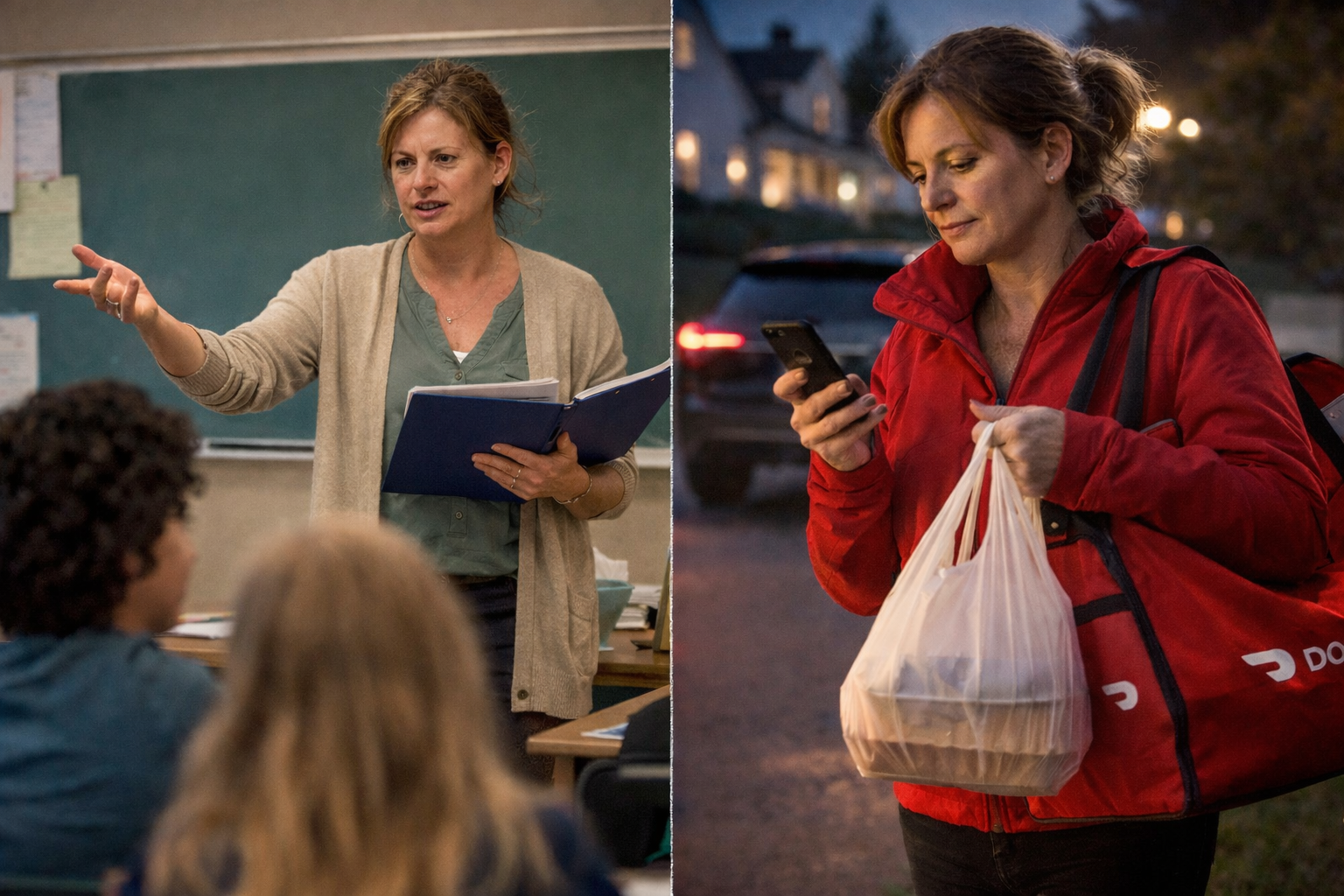
For many Americans, the image of a teacher still carries an assumption of respect and stability, such as summers off and a reliable middle-class life. But the reality is far more strained. Across the United States, a significant share of teachers are taking on second jobs just to stay financially afloat. Federal data shows that about 18% of public school teachers worked a supplemental job outside the school system during the 2017-18 school year, and more recent data suggests that roughly 17% of public school K-12 teachers were still working second jobs during the 2020-21 school year. This is far higher than the share of U.S. workers overall who hold multiple jobs. In other words, roughly one in six teachers is balancing lesson plans, grading, parent emails, and classroom management with an entirely separate source of income.
The biggest reason for this trend is that teacher pay has not kept pace with the cost of living. While the national average public school teacher salary rose to about $72,030 in the 2023-24 school year, inflation-adjusted teacher pay has still fallen by an estimated 5.1% over the past decade. Starting salaries remain especially challenging, averaging just $46,526 nationally, which can be difficult to stretch in cities with high housing, healthcare, and childcare costs. At the same time, 87% of teachers surveyed by the National Education Association (NEA) in 2024 said low pay was a moderate or serious concern. The RAND Corporation (a prominent, nonpartisan, nonprofit research organization known for objective public policy analysis) found that teachers work about 53 hours per week on average (roughly nine hours more than comparable working adults) while earning about $18,000 less in base pay. For many educators, the second job is not about extra spending money. It is about groceries, rent, gas, and medical bills.
Teachers' financial squeeze is made worse by the fact that they routinely spend their own money on students and classroom supplies. A 2025 national teacher spending survey found that educators spent an average of $895 out of pocket on school supplies during the 2024-25 school year, while 97% said their school-provided budget was not enough to cover classroom needs. That means many teachers are effectively subsidizing public education while also trying to make ends meet at home. The pressure is especially intense for younger teachers and educators in lower-paying districts.
The types of second jobs teachers take vary widely, but they usually fall into a few practical categories such tutoring, coaching, summer school, retail, food service, rideshare driving, gig delivery work, and seasonal jobs. Some teachers choose work connected to education, such as private tutoring or curriculum development, because it fits their skills and schedules. Others take whatever is flexible enough to fit around school hours. During holidays and summer breaks, many shift into retail stores, restaurants, camps, or customer service jobs.
For many, the extra work is not occasional; it is constant. A 2026 Gallup study found that among teachers with second jobs, 85% said they work those jobs at least partly during the school year, not just over summer or holiday breaks. The same study found that one in five K-12 teachers is struggling financially, and teachers with non-education side jobs were more likely to say the extra work hurt their teaching responsibilities. About 34% of teachers with unrelated side jobs said their second job negatively affected their classroom performance. That impact can show up as fatigue, stress, less time for lesson planning, and reduced opportunities to recharge.
Teachers often describe the emotional toll in blunt terms. Florida high school math teacher Ashley Modesto, who works about 10 extra hours a week as a private tutor, said the added workload was "having a negative impact on my health." Another teacher, Lucy Mehlan of Minnesota, said her side job at a bowling alley was "the only reason we can afford the little extras," even though it caused her to miss family time. These stories of professionals with degrees, certifications, and years of experience still piecing together income from multiple jobs are increasingly common.
The broader concern is what this data says about the teaching profession itself. When educators are forced to spend evenings driving deliveries, weekends tutoring, or holidays working retail shifts, it raises serious questions about retention, burnout, and the long-term health of public education. Teachers are already responsible for shaping future generations. Now, more and more, they are being asked to do that while carrying the financial stress of a second life after school. For a profession that society depends on so heavily, that reality is becoming harder to ignore.