A Crisis for Small Colleges
Written by Arbitrage • 2026-05-20 00:00:00
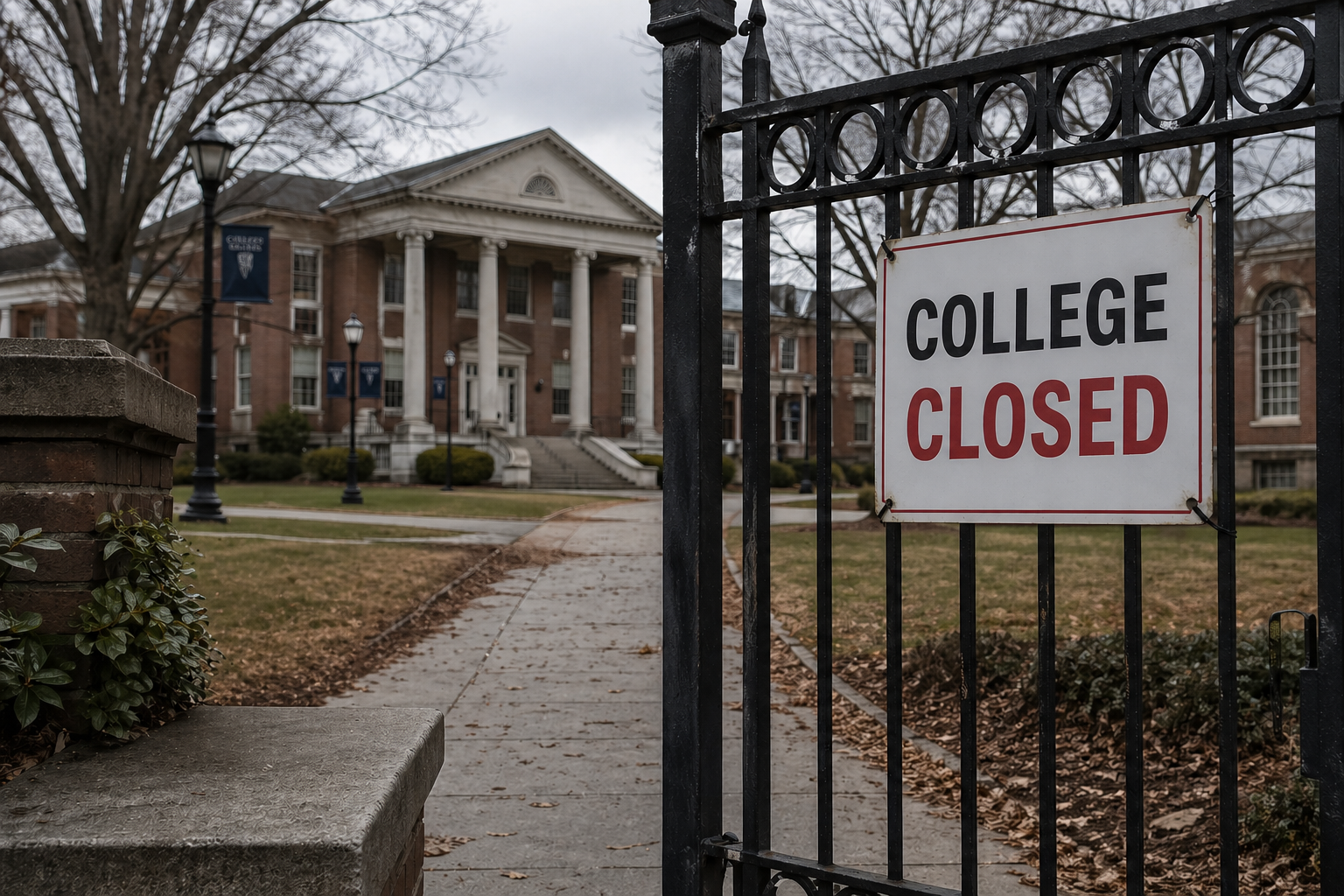
The quiet financial crisis unfolding across American higher education is no longer theoretical. It is measurable, accelerating, and increasingly visible through campus closures and emergency fundraising campaigns. While college enrollment overall has stabilized or even ticked up slightly in recent years, those benefits have not been evenly distributed. Private colleges (especially small, tuition-dependent institutions) are facing a structural squeeze that many experts now believe will reshape the sector over the next decade.
The numbers alone tell a grim story. Recent projections suggest that more than 25% of private colleges in the United States are at risk of closing within the next ten years. A widely-cited analysis estimates that about 442 of the nation's roughly 1,700 private nonprofit colleges could shut down or merge, affecting around 670,000 students. More than 120 institutions are at the very highest risk, according to the forecast by Huron Consulting Group, which helps clients in industries including higher education formulate business strategies. For its assessment, the company analyzed enrollment trends, tuition revenue, assets, debt, cash on hand and other measures. Since 2020, more than 80 public and nonprofit colleges have either closed, merged, or announced plans to do so, with tens of thousands of students disrupted in the process. Even in a typical year, closures are rising: at least 16 nonprofit institutions announced shutdowns in 2025 alone.
Behind these numbers is a fundamental imbalance between revenue and reality. Most private colleges rely heavily on tuition, and that model is becoming increasingly fragile. The most immediate pressure comes from declining enrollment at private institutions, even as public universities and community colleges see gains. The so-called "enrollment cliff" (a demographic drop in college-age students tied to lower birth rates after the 2008 financial crisis) is now arriving, shrinking the pool of potential applicants and intensifying competition among schools.
For many colleges, especially small liberal arts institutions, the math simply no longer works. Fixed costs such as faculty salaries, campus maintenance, and student services remain high, while tuition revenue becomes less predictable. Schools often try to compensate by offering larger financial aid packages, but that strategy can backfire by eroding net revenue. In some cases, institutions have attempted last-minute fundraising campaigns to stay afloat. In late 2023, Christian Brothers University here in Memphis declared "financial exigency," a severe financial condition typically reserved for institutions facing major budget emergencies, after projecting a deficit between $5 million and $7 million. To stabilize finances, the university implemented major cost-cutting measures, including layoffs, salary reductions for executives, and the elimination of multiple faculty positions and academic programs such as English, history, political science, chemistry, and physics. In 2024, CBU also eliminated 20 non-faculty positions, and in 2025 announced another 16 faculty layoffs as it attempted to rebalance its operating budget and respond to shifting enrollment trends. University officials have acknowledged that the recovery remains fragile and ongoing.
The pressure is not just demographic or financial but also cultural and economic. Increasingly, students and families are questioning the return on investment of a college degree, especially from lesser-known private institutions. As one commentary summarized the growing sentiment, many families are becoming "disillusioned with the cost-benefit ratio of college." This skepticism is compounded by rising student debt, shifting labor market demands toward technical and vocational skills, and the rapid expansion of alternative education pathways such as certifications and online programs.
International enrollment - once a critical financial lifeline for many private colleges - has also become less reliable. In 2025, new international student enrollment dropped by 17%, with most institutions citing visa issues and travel restrictions as contributing factors. Because many international students pay full tuition, even modest declines can have outsized financial consequences for smaller schools.
What makes this moment particularly significant is that the trend appears structural rather than cyclical. Institutions with large endowments, strong brand recognition, or specialized programs tied to high workforce demand are far more likely to survive. The result is likely to be a reshaped higher education landscape, with fewer small private colleges, more consolidations, and a stronger concentration of students in larger public institutions.