Back to School: Uniform vs Dress Code
Written by Arbitrage • 2026-08-07 00:00:00
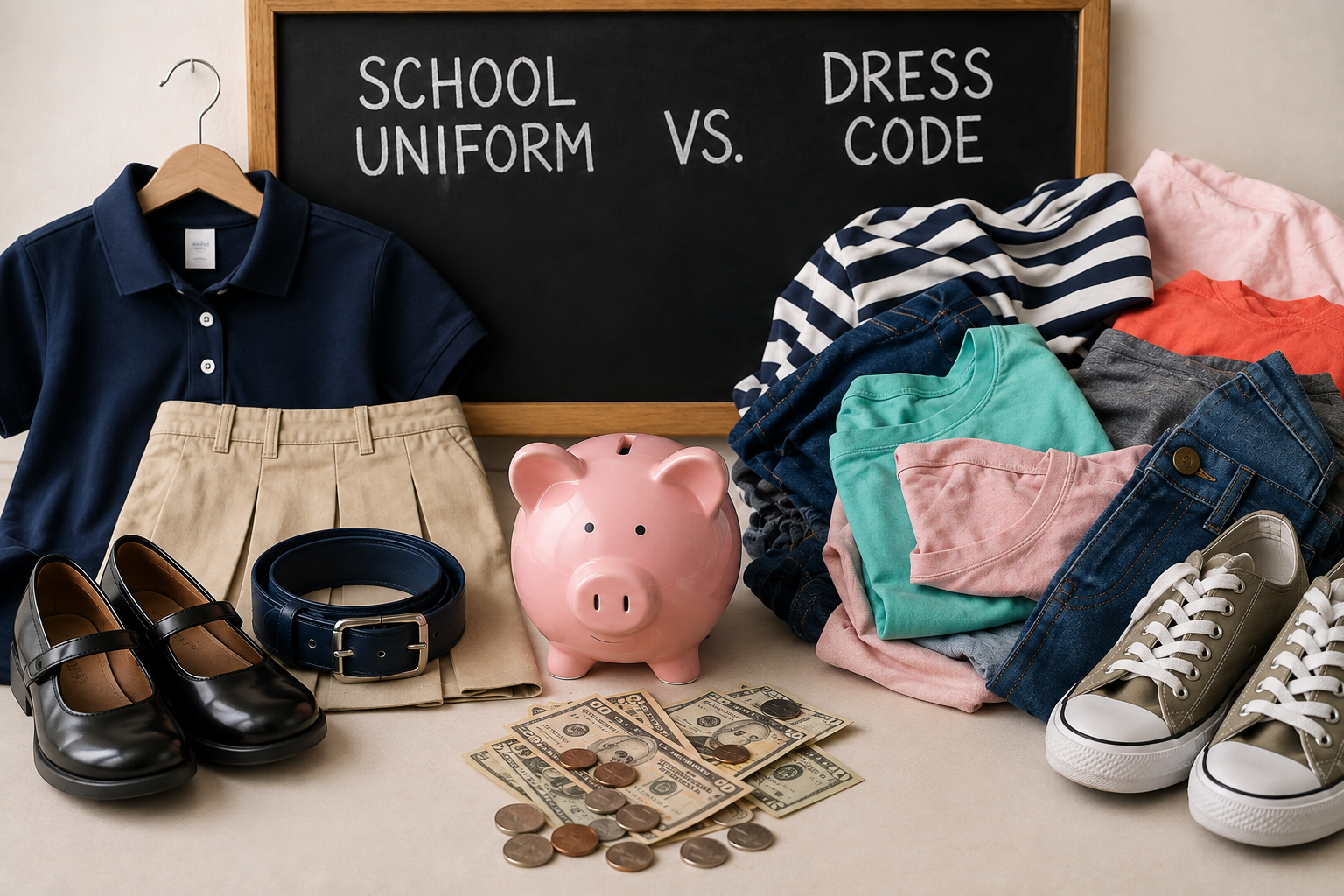
Back-to-school shopping has never been inexpensive, but one factor can dramatically change the size of the budget: whether a child wears a school uniform or follows a dress code. At first glance, uniforms appear to be an added expense because parents must purchase specific shirts, pants, or skirts, and sometimes even shoes and outerwear from approved retailers. However, families whose children attend schools with only a general dress code often find themselves buying a much larger wardrobe to meet social expectations, fashion trends, and seasonal changes. While every family's experience is different, the total cost of clothing throughout the school year can vary significantly depending on which policy a school follows.
According to the National Retail Federation (NRF), families with children in elementary through high school expect to spend an average of about $425 on clothing, accessories, and shoes during the 2026 back-to-school shopping season. This cost part of an overall average spending of nearly $864 per student for school-related purchases. A survey of over 1,000 parents by Jones Lang LaSalle Incorporated (JLL) showed that parents plan to increase their back-to-school spending by 11.7% this year, compared to last year. Even with this planned increase, the NRF also reported that affordability remains the top concern for parents, with nearly half planning to purchase only essential items at the beginning of the school year and many spreading purchases across several months to stay within budget.
For families whose schools require uniforms, the initial shopping trip can sometimes feel expensive. Purchasing several polo shirts, uniform pants or skirts, sweaters, belts, and other accessories may require a sizable upfront investment - especially if the school requires branded items from a designated supplier. Many parents say the costs level off after that first purchase because the same clothing can often be worn for multiple school years or passed down to younger siblings. Melissa Harding, a mother of three from Kentucky, explained, "The first August was painful because we had to buy everything at once, but after that we were only replacing what the kids outgrew. Overall, we spend much less now than we did when they could wear anything." Her experience reflects the common parents experience of higher startup costs but fewer impulse purchases throughout the year.
Families with dress codes often experience the opposite pattern. While there may be no requirement to buy specific uniforms, children frequently want multiple outfits to avoid repeating the same clothes each week. Fashion trends, peer pressure, and social media can all influence purchasing decisions, resulting in a steady stream of new jeans, hoodies, shirts, and sneakers. Parents also face the challenge of determining whether clothing complies with school rules governing length, logos, graphics, or other criteria. This sometimes can lead to duplicate purchases after certain items are deemed unacceptable. Jason Miller, the father of a seventh grader in Ohio, joked, "I thought a dress code meant we'd save money. Instead, we're buying clothes all year because styles change every few months." His daughter, Ava, offered her own perspective and noted, "Nobody wants to wear the same outfit every week. You notice what everyone else is wearing, even if adults think you don't."
Research on school uniforms has produced mixed conclusions about their effects on academic achievement and behavior, but their financial impact depends largely on how schools implement their policies. Uniforms purchased through exclusive vendors can become expensive, while schools that allow generic khaki pants and solid-color polo shirts sold by major retailers often keep costs relatively low. Likewise, dress code schools can be affordable if parents focus on basic, versatile clothing rather than trend-driven wardrobes. Ultimately, the biggest cost difference may not come from the school's policy itself, but from how much social pressure influences purchasing decisions.
For families preparing for this new school year, there is no universal answer to which option is cheaper. Uniforms may require a larger check at the beginning of the school year, but they often reduce ongoing clothing purchases. Dress codes offer greater flexibility and personal expression, yet they can quietly encourage higher spending over time as children seek new styles throughout the year. As household budgets remain under pressure, parents are discovering that the least expensive wardrobe is not always the one with the fewest rules, but the one with the clearest expectations and the most disciplined shopping strategy.