Every Mark Tells a Story: The Lost Art of Scoring a Baseball Game
Written by Arbitrage • 2026-09-04 00:00:00
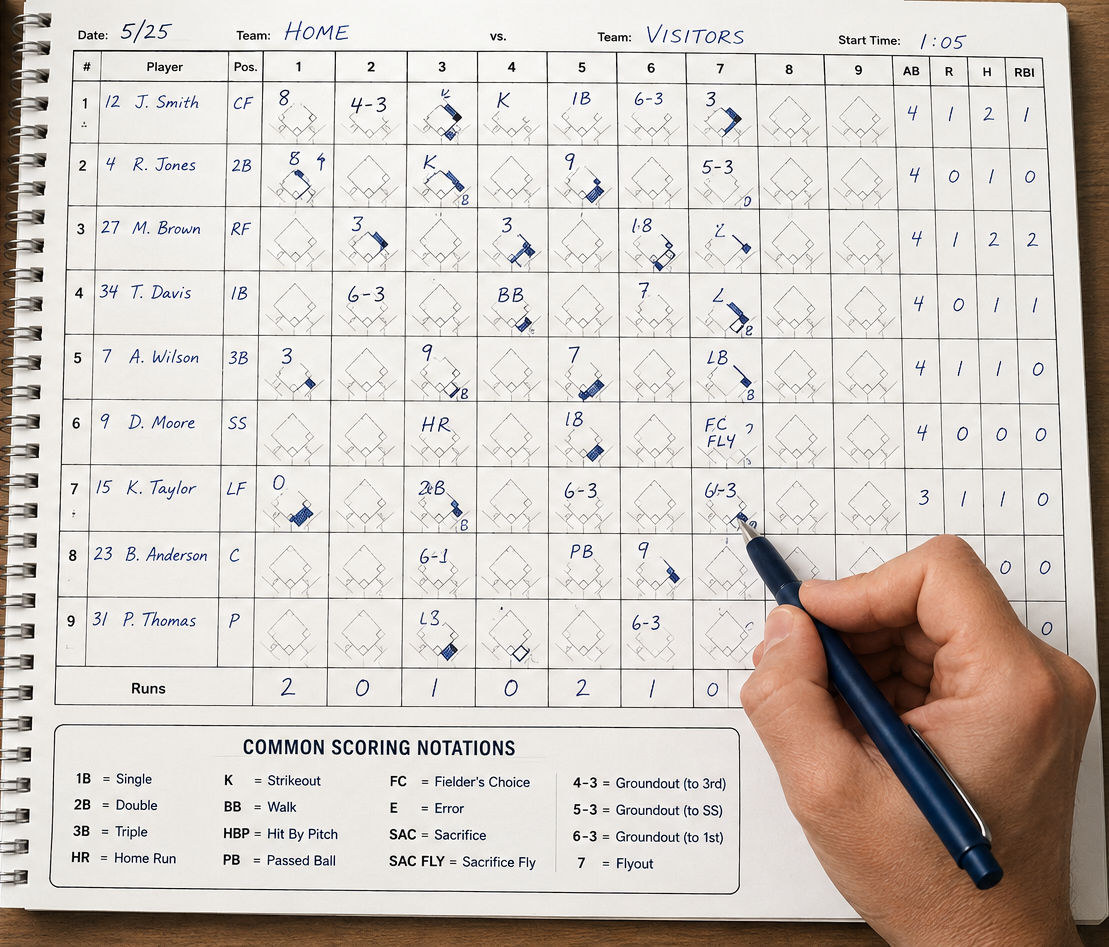
Long before smartphones displayed every statistic in real time and advanced analytics became part of every broadcast, baseball fans created their own data. Armed with nothing more than a game program, a sharpened pencil, and a scorecard, they recorded every pitch, hit, error, and run as the game unfolded. Looking back, scoring a baseball game wasn't just a hobby; it was an exercise in observation, pattern recognition, and analytics. In many ways, it's not all that different from how traders study charts and market data today.
Baseball's Original Analytics
If you attended a Major League Baseball game in the 1990s or early 2000s, buying a program often meant receiving a blank scorecard inside. Throughout the game, fans carefully documented every at-bat, strikeout, stolen base, and double play using a language all its own. Each notation became a data point. By the final inning, the scorecard told a complete story of not just who won, but how the game unfolded one play at a time.
Looking Beyond the Score
Casual fans often leave the stadium remembering only the final score. Those who kept score remembered much more. They noticed pitching changes, defensive shifts, sacrifice bunts, and momentum swings that shaped the outcome. Just as traders study price action instead of focusing solely on today's closing price, baseball scorekeepers learned that every small event contributed to the bigger picture.
Statistics Tell the Story
Baseball has always been a game driven by statistics. Batting averages, earned run averages, on-base percentages, and fielding percentages all help explain player performance beyond what appears on the scoreboard. Financial markets work much the same way. A stock's current price tells only part of the story. Technical indicators, trading volume, volatility, momentum, and historical trends often provide the deeper context needed to understand what may come next. Whether you're scoring a baseball game or analyzing a stock chart, patterns often reveal more than a single number ever could.
A Record Worth Keeping
One of the best parts of scoring a game was taking home more than just a souvenir. Years later, opening an old scorebook instantly brought back memories of a spectacular catch, a game-winning home run, or an extra-inning thriller. Every handwritten notation became part of a personal history that no mobile app could truly replicate.
Technology Changed the Experience
Today's fans have access to incredible technology. Live pitch tracking, instant replays, advanced metrics, and mobile apps deliver more information than ever before. Ironically, that convenience has made handwritten scorecards increasingly rare. Walk through most Major League ballparks today, and you'll see thousands of phones, but very few pencils.
Why It Still Matters
Scoring a baseball game teaches patience, attention to detail, and an appreciation for how small moments add up to larger outcomes. Those same qualities are valuable whether you're following your favorite team or analyzing financial markets. The tools have evolved, but the mindset remains remarkably similar. Success often comes from looking beyond the headline, recognizing patterns, and understanding that every statistic contributes to a much bigger story.
Perhaps that's why the lost art of keeping score still resonates today. It reminds us that sometimes the best insights don't come from watching the final result; they come from paying attention to every step that leads there.