"Prost!" What is Octoberfest all About? A Brief History
Written by Arbitrage •
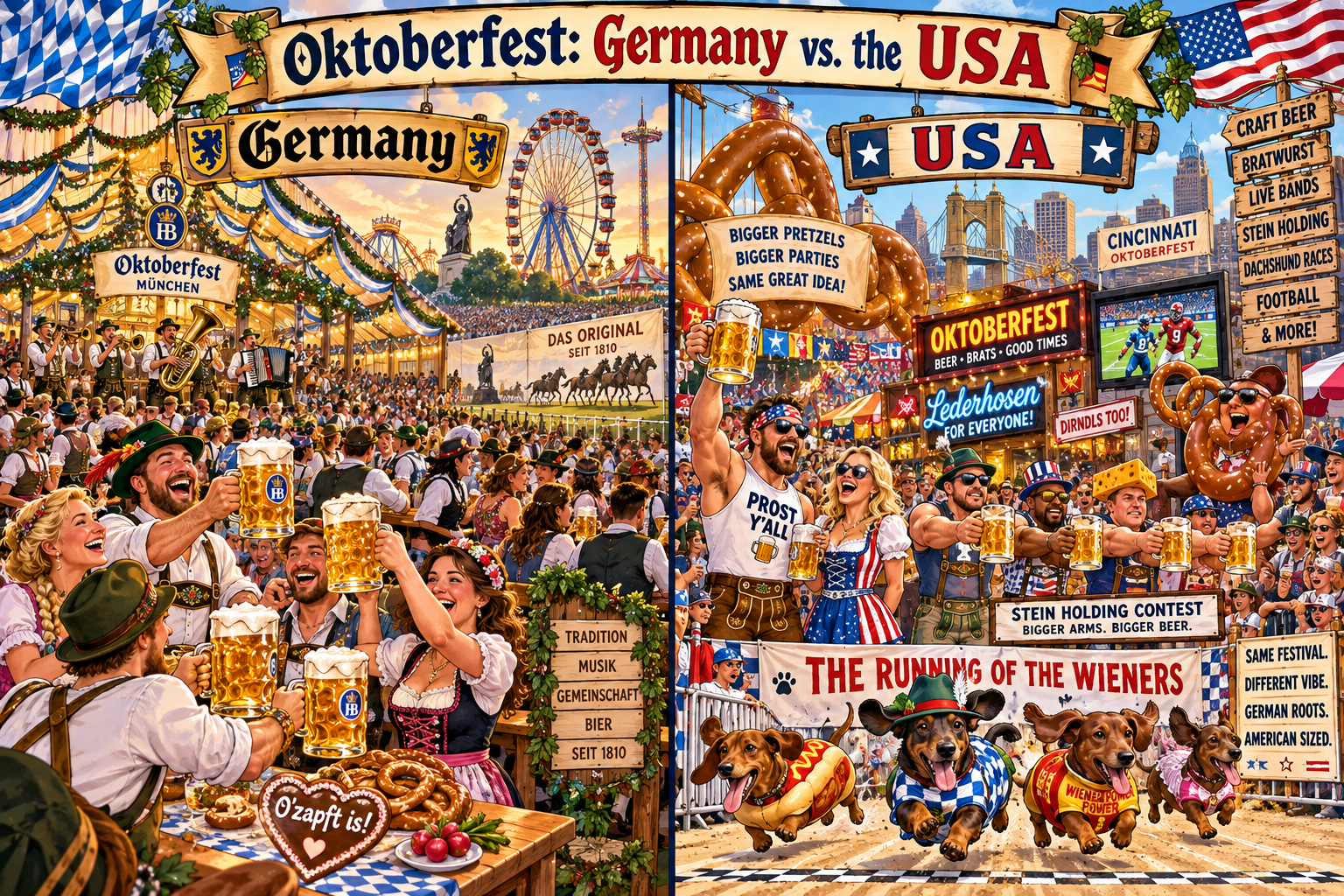
Oktoberfest did not begin as a plan to sell seven-dollar pretzels the size of a steering wheel. It began as a royal wedding party that got out of hand. On October 12, 1810, Bavarian Crown Prince Ludwig married Princess Therese of Saxe-Hildburghausen, and Munich decided the public deserved more than a polite wave from a balcony. Five days of civic revelry ended on October 17 with a horse race on a meadow outside the city gates. They named the field Theresienwiese after the bride - locals still just call it "the Wiesn" - and liked the party so much they ran it again the next year without needing another prince. Beer tents arrived later. The original brief was horses, poems, and fruit. History took one look at that and said, "Cute. Now add a million liters of lager."
The calendar joke writes itself: Oktoberfest starts in September because late October in Bavaria is cold enough to make even a "MaB" (pronounced "mahhs) look like a bad idea. Munich's official bash now runs about 16 days from mid-September into early October and still dwarfs everything else on Earth. Recent years have drawn roughly 6.5 million visitors and about 6.5 million liters of beer, with a peak around 7.2 million guests in 2023. Americans are the largest foreign contingent. That is either a compliment to Bavarian hospitality or proof that U.S. passport holders will fly eight hours for a chicken dance. Possibly both.
The United States did what the United States always does with a good European idea: it cloned it, super-sized it, and scheduled dachshund races. Cincinnati's Oktoberfest Zinzinnati is the heavyweight, pulling 700,000 to 800,000 people - sometimes flirting with a million - over a long weekend on the riverfront. La Crosse, Wisconsin, has been at it since 1961 and bills itself as Oktoberfest USA. Denver stretches the party across two weekends. Helen, Georgia, and Leavenworth, Washington, went full theme-park Bavaria and never looked back. None of them will ever match Munich's tent real estate, but they have something Munich cannot offer: the Running of the Wieners. Try explaining that with a straight face to a visitor from Passau.
For American bars, October is less a month than a merchandising season with lederhosen. Official Munich dates wrap early, but U.S. drinkers associate "Oktoberfest" with the whole month, so taprooms that put a Marzen or Festbier on the board keep selling it well after the last horse has left the Wiesn. Industry snapshots have shown that when venues actually feature the style, it can grab an outsized share of beer sales - sometimes a majority of the beer column in September and October - and the pour often commands a couple of dollars more than a house lager. Happy hour is the sweet spot. Sam Adams Octoberfest still tends to outsell the German imports on many American bars, which is either cultural appropriation or the free market wearing a felt hat.
That is the quiet economic engine under the yodeling. A neighborhood pub does not need 800,000 people if it can turn a seasonal six-pack into a four-week ritual: pretzel boards, stein-holding contests of questionable legality, and a chalkboard that says "O'zapft is!" even if the bartender pronounces it like a sneeze. Miss the window and you are stuck explaining why the pumpkin ale is back in November. Hit it and October becomes the one month when a malty amber lager feels like patriotism, tourism, and a group project all at once.
So the lineage is simple. A Bavarian wedding invented a meadow party. Munich turned the meadow into the world's largest folk festival. America turned the festival into a coast-to-coast excuse to drink beer that tastes like toasted bread and call it culture. The biggest stage is still Theresienwiese. The loudest American echo is Cincinnati. And the smallest, most profitable version is whatever corner bar remembered to tap the Festbier before the first football Sunday in October. Prost - and maybe don't try the horse race on the way home.