It’s Cybersecurity Awareness Month: The Scams AI Just Made Much Harder to Spot
Written by Arbitrage • 2026-10-02 00:00:00
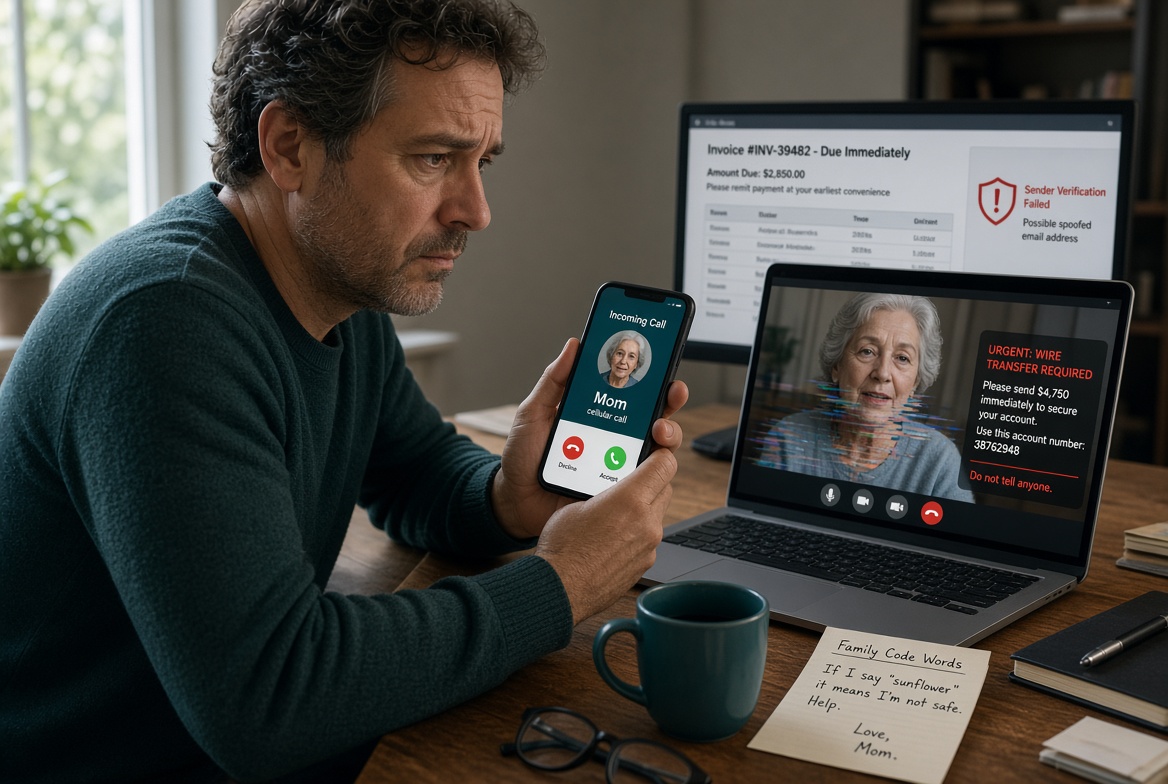
The old scam playbook was almost charming. Bad grammar, a prince with a frozen bank account, and a link that looked like it had been typed by someone wearing oven mitts. You could spot the con from across the room. Then generative AI showed up, fixed the spelling, cloned the voice, and started scheduling the video call. The FBI's Internet Crime Complaint Center gave AI its own line in the 2025 crime report for the first time: 22,364 complaints and about $893 million in reported losses. That is only the fraud people recognized as AI. The rest just felt like a very convincing Tuesday.
Voice cloning is the one that gets people in the gut. A few seconds of audio - a voicemail greeting, a podcast clip, a wedding toast posted on Instagram - is enough for a commercial tool to sound like someone you love. Listeners in a Berkeley study were barely better than a coin flip at labeling scripted clones as fake, and they often matched the clone to the real person. The classic "Grandma, I'm in jail, wire bail" call now arrives in your grandson's actual cadence, including the way he says "uh" when he is stalling. The useful tell is not the voice. It is improvisation. A clone reciting a script is smooth. A clone answering "what did we have for dinner last Thursday, and what did the dog do to the couch?" is suddenly less fluent than a karaoke machine.
Email got the same glow-up. Microsoft has reported AI-written phishing clicking through at about 54 percent, versus roughly 12 percent for the hand-typed stuff. 2026 trends put AI behind most phishing volume. The message no longer says "kindly revert the invoice." It matches your company's tone, cites a real project name scraped from LinkedIn, and lands from an address one character off from accounts payable. Business email compromise used to fail on phrasing. Now it fails only if someone still insists on a second channel before moving money. Urgency is the product. "The wire has to go in the next twenty minutes!" is doing more work than the deepfake.
Romance scams industrialized next. In 2026, investigators described dating-app networks running thousands of AI personas at once - Anthropic publicly flagged one operation with more than 4,700 fabricated profiles talking to at least 25,000 people, with human gig workers stepping in when a target demanded a live video call. The chatbot handles the 2 a.m. "you up?" messages. The person handles the proof-of-life. Victims are not falling for a badly cropped stock photo of a yacht. They are falling for a conversation that remembers their dog's name and never gets tired. Loneliness does not grammar-check.
The old detection advice aged out. "Look at the hands." "Listen for a robotic tone." "Trust your eyes." Security researchers, including people who built their careers on spotting fakes, now say voice clones routinely fool experts. Video calls can feature a face you trust saying words that person never spoke - the Arup case, where a finance employee wired about $25 million after a meeting full of deep faked colleagues, is the cautionary poster. Malwarebytes found that by 2026 a large majority of people already felt scams were hard to tell from the real thing, and about half had run into an AI-driven one. Gen Z, the group that grew up online, reports the highest exposure. Fluency is no longer evidence. Familiarity is no longer evidence. A polished email is the new Nigerian prince, just with better margins.
The fix is boring, which is why it works. Pick a family code word that never appears in a text, a post, or a voicemail greeting. If money, gift cards, or crypto enter the chat, hang up and call back on a number you already have. Do not scan a QR code that arrived uninvited. Treat any sudden change in payment instructions as fake until a human you can reach confirms it out of band. And if a new match on an app is available at all hours, never asks to meet, and steers you toward "coins," an investment, or a courier: that is not chemistry. That is a language model with a quota. The scam did not get smarter than you. It got better at sounding like the person you already trust. Verify the channel, not the vibe.