So Columbus Wasn’t the First European in America?
Written by Arbitrage • 2026-10-07 00:00:00
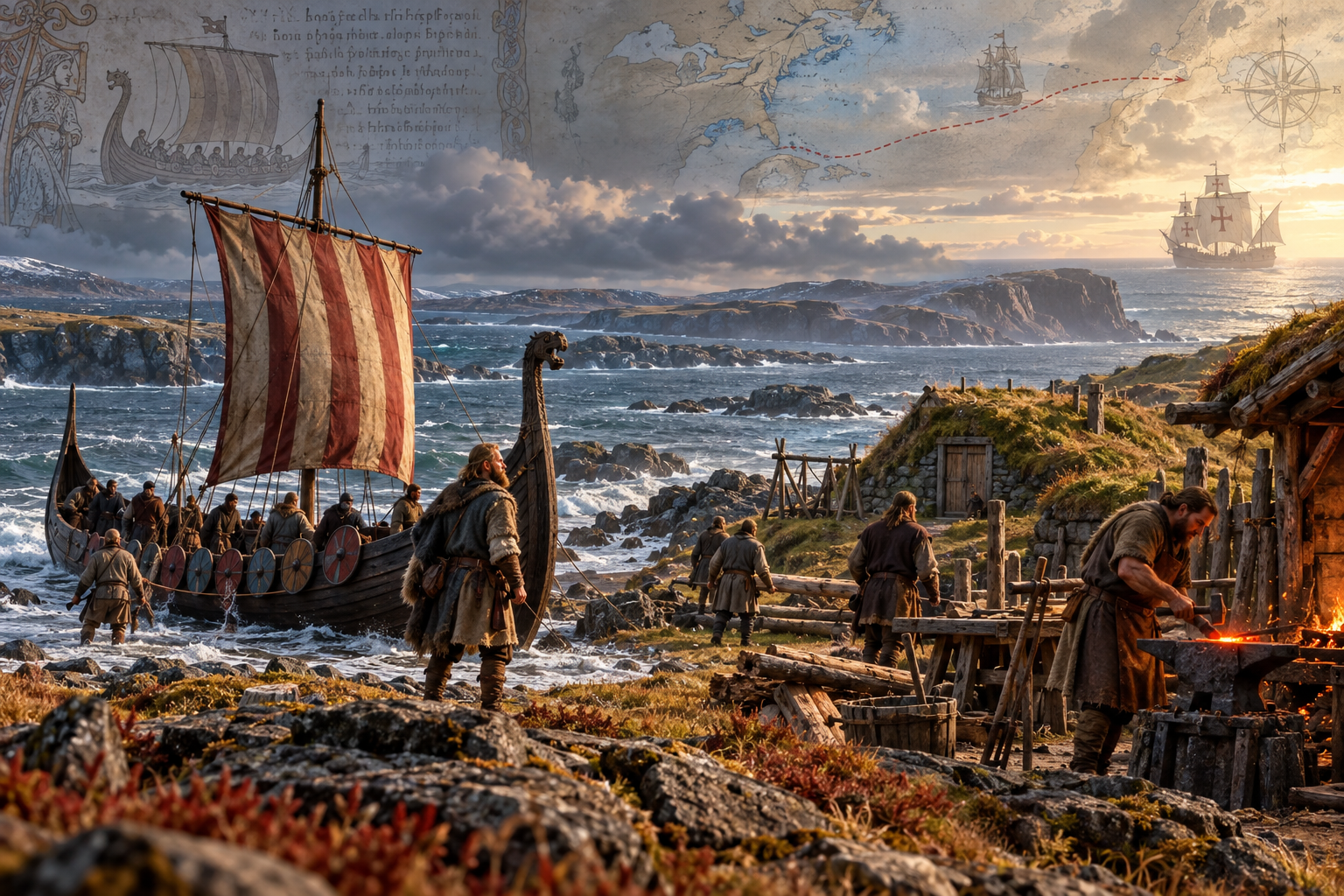
Friday is Leif Erikson Day, which means America briefly remembers that a Norse sailor may have reached this continent about five centuries before Columbus, then goes back to arguing about a Monday holiday. October 9 sits awkwardly on the calendar three days before Columbus Day, like a historical correction that arrived early and is now standing by the punch bowl.
The part historians are actually sure about is a windy spit of Newfoundland called L'Anse aux Meadows. In the 1960s, Helge Ingstad and Anne Stine Ingstad excavated turf-walled buildings, a forge, iron nails, and woodworking debris that are Norse, not Indigenous, and not a tourist-board fever dream. Radiocarbon dates put the settlement around the year 1000. Somebody from Greenland crossed the North Atlantic, built a camp, smelted iron, and left. That is not a myth.
What the sagas add is the plot. The Saga of the Greenlanders and the Saga of Erik the Red give us Leif Erikson, a land of wild grapes called Vinland, hostile encounters, and at least one ill-advised real-estate decision. Sagas are terrific literature and unreliable depositions. They were written centuries after the voyages, in Iceland, by people who liked a good story and were not especially worried about your footnotes. Grapes in Newfoundland remain a botanical argument. A Norse presence in Atlantic Canada does not.
The gap between those two things is the whole lesson. Archaeology can show that Norse travelers reached North America and stayed long enough to repair a boat. It cannot show that Leif personally named every cove, founded a dynasty, or would have appreciated a horned helmet, which Vikings did not wear into battle and which the Minnesota Vikings wear anyway. Mythology is allowed to be larger than the site. It is not allowed to replace it.
Columbus still happened. In 1492 he reached the Caribbean, reported it to a European court, and kicked off sustained contact that remade the hemisphere. Leif's voyage, if the sagas have the right man attached to the right beach, did not. A short-lived camp at the edge of the map is not the same event as a route that stayed open. Both can be true without turning Friday into a victory lap or Monday into a group project. Indigenous nations were already here for either arrival, which is the sort of detail both holidays sometimes set down and forget to pick up.
So celebrate Friday if you like, ideally with something less cursed than a late-season Vikings lead. Raise a glass to a real Norse site in Newfoundland, to sailors who crossed an ugly ocean in open boats, and to the rare historical argument that ends with a UNESCO plaque instead of a comment section. Then let Monday have Columbus, the parades, and the argument. History is big enough for both, and the horned helmet remains non-canonical, no matter what the end zone says.