Halloween 2026: Apparently, Being Scared Is a $13.5 Billion Business
Written by Arbitrage • 2026-10-19 00:00:00
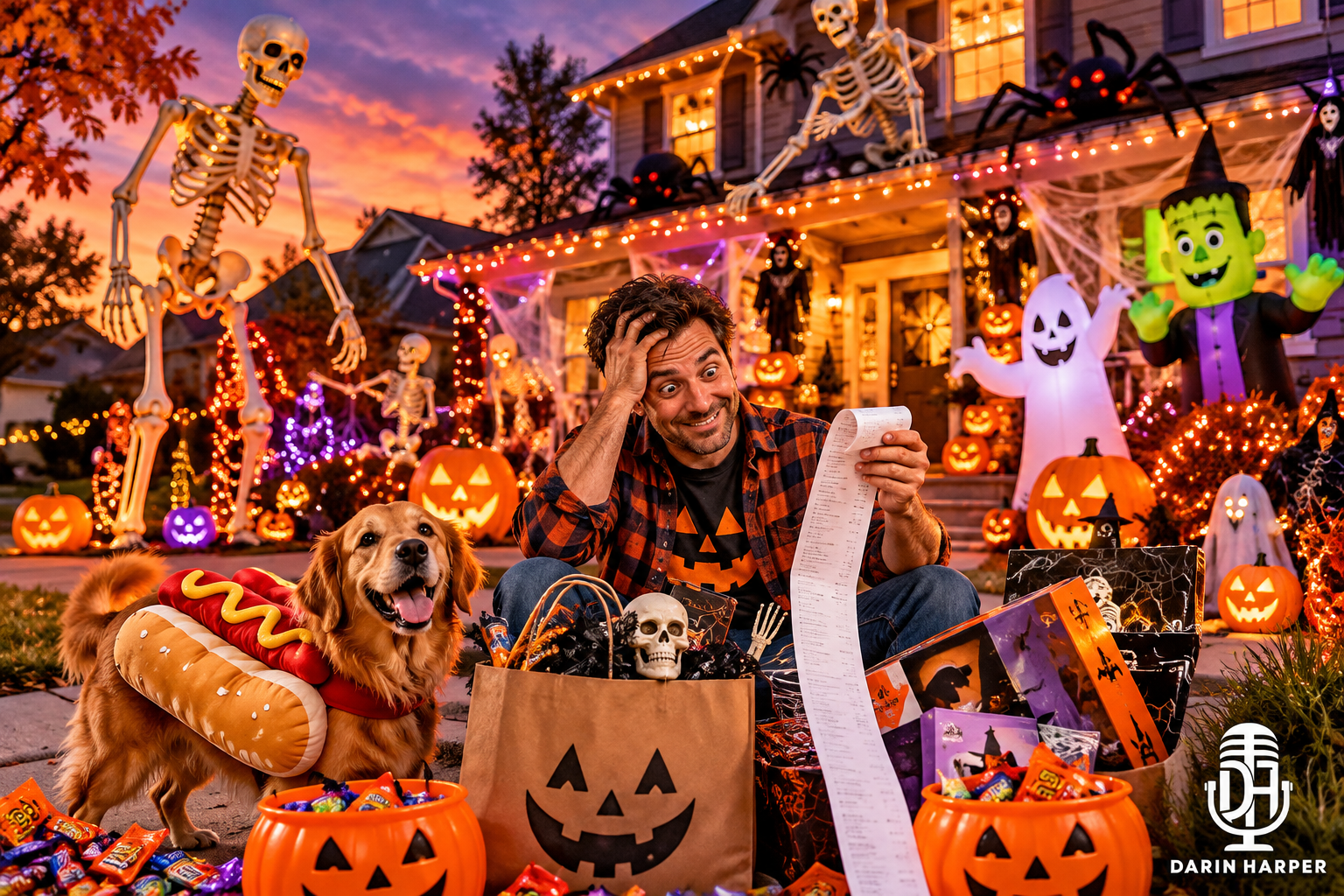
Halloween used to be simple. You cut a face into a pumpkin, bought enough candy to survive a small siege, and hoped the kid dressed as a vampire did not recognize you from last year when you handed out raisins. In 2026, Halloween has become a full-scale economic event. The National Retail Federation expects Americans to spend $13.5 billion on the holiday this year, up from $13.1 billion in 2025. About 74% of consumers say they plan to celebrate, which means nearly three out of four Americans have apparently agreed that being frightened, overdecorated, and mildly sugar-sick is a worthwhile use of disposable income.
The money disappears into three main black holes: costumes, decorations, and candy. NRF expects consumers to spend about $4.4 billion on costumes, $4.3 billion on decorations, and $4.1 billion on candy. That means Americans are collectively spending more than four billion dollars to make their yards look abandoned, haunted, cursed, or all three. We are buying twelve-foot skeletons, fog machines, animatronic witches, gravestones with pun-based names, and enough fake cobweb to make the neighborhood look like Spider-Man gave up on property maintenance.
Then come the costumes, where logic officially leaves the building. Adults spend real money dressing as superheroes, serial killers, movie characters, inflatable dinosaurs, and whatever became a meme three weeks earlier. Children remain committed to witches, vampires, Batman, Spider-Man, and ghosts. Pets, meanwhile, have been dragged into the retail ecosystem without legal representation. Americans are expected to spend about $920 million on pet costumes this year, with pumpkins leading the list and about 5.9% of pet-costume buyers choosing a hot dog. Somewhere tonight, a dachshund is staring into the middle distance wondering how evolution came to this.
The really interesting part is how early the spending starts. Nearly half of Halloween shoppers began in September or earlier, compared with roughly a third a decade ago. Halloween is no longer one night; it is apparently a fiscal quarter. Retailers know this, which explains why skeletons sometimes appear next to patio furniture while the temperature is still 92 degrees. People are also trying to stretch their budgets: 31% say they will comparison-shop if prices seem too high, 26% will hunt for sales or coupons, and 34% are looking for decorations they can reuse. In other words, the giant skeleton is not an impulse purchase. It is an investment property.
Why are we willing to spend this much? Because Halloween is one of the few holidays that gives adults permission to behave like children without having to explain themselves. You can decorate your house like a cemetery, eat candy for dinner, wear a cape to the grocery store, and deliberately pay someone to scare you in a dark hallway. It is nostalgia, theater, neighborhood competition, social media content, and retail therapy wearing vampire teeth. Even artificial intelligence has joined the party: NRF says 47% of consumers are using AI tools in some way for Halloween shopping, including brainstorming and product research. Apparently we have reached the stage of civilization where a computer can help you determine whether your front porch needs three witches or five.
So yes, $13.5 billion sounds absurd until you remember what Halloween actually sells. It is not just candy and costumes. It sells permission to decorate badly, scare your friends, embarrass your pets, and turn an ordinary October night into something ridiculous enough to remember. Americans may complain about inflation while standing in line with a $79 animated zombie, but Halloween has never been famous for restraint. The economy may have its sharks, bears, bulls, and recessions. Halloween has inflatable dragons, chocolate bars, and a Labrador dressed as a taco. Frankly, the taco Labrador may be the better investment.