The Housing Makeover: When Improving a Neighborhood Prices Everyone Out
Written by Arbitrage • 2026-10-29 00:00:00
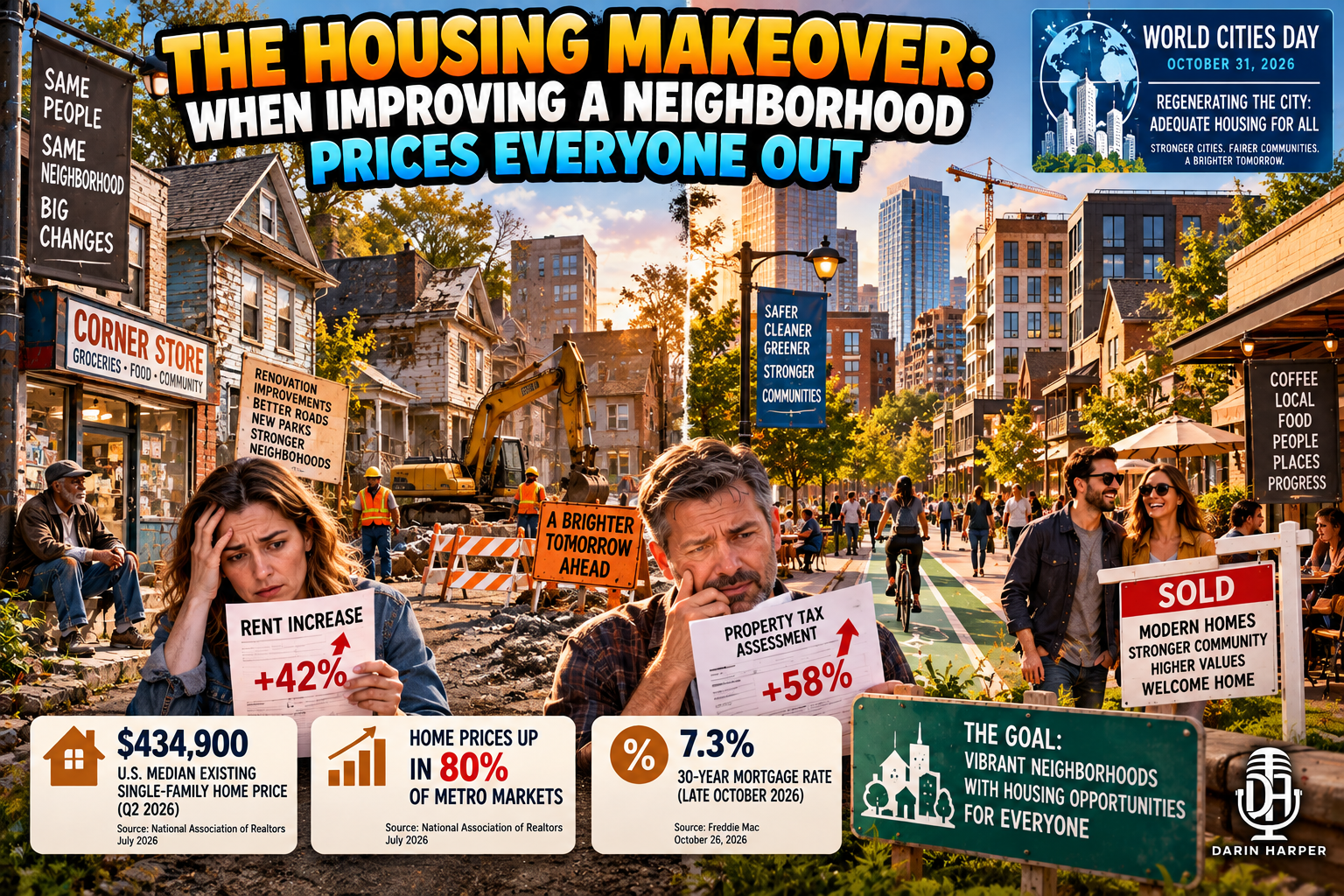
World Cities Day arrives October 31 with a theme that could have been written specifically for the American housing market: improving cities while making sure people can actually afford to live in them. The idea behind neighborhood renewal sounds simple enough - repair aging homes, improve streets, add parks, attract businesses, make areas safer, and create places people want to call home. Then something funny happens. The neighborhood gets nicer, investors notice, property values start climbing, rents follow, and the people who spent years living through potholes, boarded-up storefronts, and questionable streetlights discover that the reward for surviving the old neighborhood may be getting priced out of the new one.
This tension is especially sharp in the United States because housing is already expensive before anybody installs the artisanal coffee shop. Home prices remain elevated across much of the country, mortgage rates continue to make monthly payments painful, and affordability has become one of the biggest obstacles facing would-be buyers. A neighborhood does not have to transform into Manhattan overnight to become expensive. Add a few renovated duplexes, a brewery, bike lanes, upscale apartments, and a mural featuring the word community, and somebody will eventually list a two-bedroom bungalow for $600,000 while describing the detached garage as flexible creative space.
The frustrating part is that neighborhood improvements really can make life better. Better transit can shorten commutes. Safer streets can attract families. New businesses can create jobs. Renovated housing can eliminate dangerous conditions. Parks, sidewalks, schools, grocery stores, and public spaces can improve daily life. The real question is who gets to enjoy those improvements. If most of the financial benefit goes to investors and property owners while longtime renters absorb higher costs, urban renewal can become a very expensive game of musical chairs. You can fix the neighborhood and still damage the community that made it a neighborhood in the first place.
Homeowners are not automatically protected either. Rising property values sound wonderful when a real-estate website tells you your house gained $80,000 in value while you were making coffee. Unfortunately, you cannot pay the electric bill with an online estimate. Higher assessments can mean higher property taxes, insurance costs may rise, and older homeowners living on fixed incomes can feel pressure to sell even when they never intended to move. Renters often feel the squeeze faster because landlords can raise rents as demand increases. Meanwhile, new apartment developments sometimes arrive with rooftop lounges, dog-washing stations, yoga rooms, podcast studios, and rents requiring three roommates and a second job. Technically, the neighborhood gained housing. Affordability simply forgot to move in.
There is no single policy that fixes the problem. American cities are experimenting with zoning changes, apartments near transit, accessory dwelling units, affordable-housing requirements, tax incentives, housing vouchers, community land trusts, preservation programs, and tenant protections. Building more housing can help relieve shortages, but the type and price of that housing matter. Build too little and scarcity keeps prices elevated. Build plenty of expensive housing while ignoring displacement, and the neighborhood may change faster than existing residents can adapt. The challenge is not simply to build nicer neighborhoods. It is to build enough housing, improve communities, attract investment, and somehow avoid turning every success story into a bidding war.
That may be the best lesson from World Cities Day. A neighborhood should be able to improve without requiring the people who already live there to pack a moving truck. New restaurants, safer sidewalks, renovated houses, better schools, and investment are not the enemy. The real test is whether longtime residents get to enjoy those improvements afterward. Otherwise, urban renewal becomes the housing equivalent of renovating someone's kitchen and then telling them they can no longer afford to eat there. A successful neighborhood makeover should produce stronger communities and more housing opportunities, not simply a prettier zip code with a much higher cover charge.