College Football's Biggest Rivalries: When School Pride Becomes Big Business
Written by Arbitrage • 2026-11-12 00:00:00
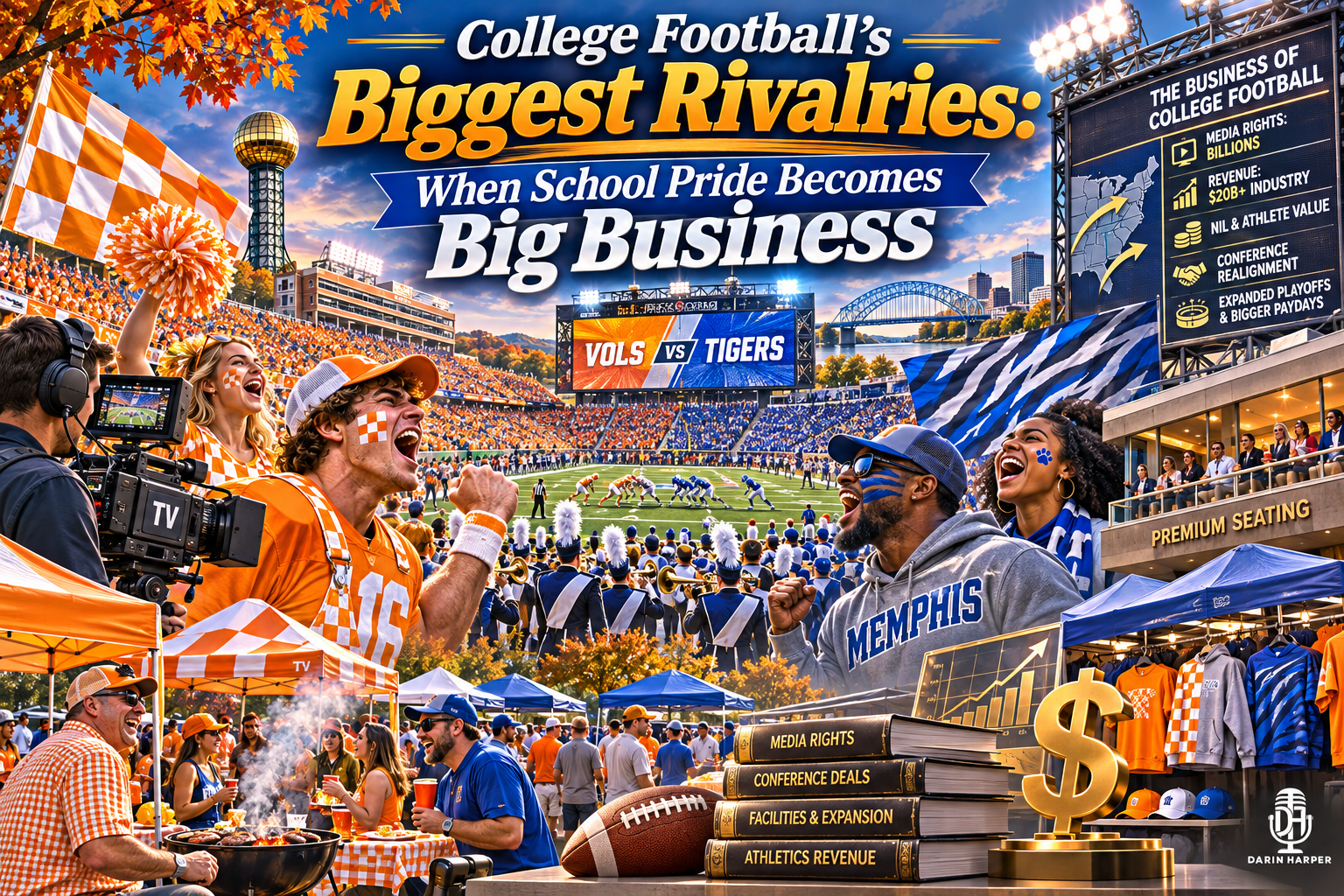
College football has always understood something professional sports occasionally forget: the game begins long before kickoff. It starts when somebody fires up a grill at 8 a.m., paints their face in school colors, puts a flag on the truck, and begins explaining why losing to "that other school" would ruin an otherwise perfectly good year. Rivalries turn campuses into festivals and families into temporary negotiating zones. Alabama-Auburn, Ohio State-Michigan, Texas-Oklahoma, Army-Navy, Florida-Georgia and dozens of others are more than football games. They are traditions passed between generations. Here in Tennessee, the orange-and-white culture surrounding the Tennessee Volunteers can turn an SEC Saturday into a statewide event, while Memphis Tigers fans bring their own blue-and-gray identity to Simmons Bank Liberty Stadium. Tailgating, marching bands, fight songs, mascots, alumni gatherings and decades of grudges are what transform a sporting event into something closer to a family holiday except Thanksgiving rarely comes with a fourth-and-goal.
The emotional investment is enormous, but so is the financial investment. College football is now one of the most valuable entertainment properties in America, and the SEC illustrates the scale of the business. The conference distributed about $1.03 billion to its universities from the 2024-25 fiscal year, with established members receiving an average of roughly $72.4 million. Tennessee Athletics reported more than $304 million in total revenue during fiscal 2025, including about $151 million generated by football alone. That means every sold-out stadium, premium seat, television audience, sponsorship, jersey, concession stand and donor contribution is part of an economic machine operating behind all that school spirit. When 100,000 people sing "Rocky Top," it sounds like tradition. Somewhere in an accounting office, however, it also sounds like recurring revenue.
Television changed the economics most dramatically. Media companies are not paying billions simply because they enjoy watching marching bands. They are buying dependable live audiences, and rivalry games are among the rare television events people still feel compelled to watch in real time. That demand has made conference membership increasingly important because conferences negotiate television rights collectively and then distribute revenue to their members. The financial difference between leagues can be enormous. Memphis provides a useful local example. The Tigers remain in the American Conference for 2026-27, while Tennessee competes in the much wealthier SEC. Memphis received about $12 million from the American Conference for the 2024-25 fiscal year, while a long-standing SEC member could receive more than $70 million from conference distributions. Suddenly conference realignment begins to look less like rearranging a football schedule and more like corporate merger activity with mascots.
That money gap helps explain why conference realignment has been one of the biggest stories in college sports. Geography once helped define conferences; television markets, playoff access and media value increasingly help define them now. Texas and Oklahoma joining the SEC, the rebuilding of the Pac-12, and years of movement involving the Big Ten, Big 12 and ACC demonstrate how aggressively schools are positioning themselves for the future. Memphis has repeatedly appeared in realignment discussions because its athletic program, market, facilities and football history make it an intriguing candidate whenever larger conferences consider expansion. The Tigers also show the challenge facing ambitious programs outside the biggest revenue leagues: Memphis reported more than $72 million in athletics revenue for fiscal 2025, yet the financial resources available to the largest SEC and Big Ten programs operate on an entirely different scale.
The business model is changing in another important way: athletes themselves now participate more directly in the economics. Following approval of the House v. NCAA settlement in June 2025, participating schools can provide direct financial benefits to student-athletes under a revenue-sharing system. The benefits cap was $20.5 million per institution for 2025-26, and the estimated cap for 2026-27 is approximately $21.3 million. Add name, image and likeness opportunities, sponsorships, collectives, apparel deals, premium seating, stadium renovations and increasingly sophisticated fundraising, and the old image of amateur college athletics has become much harder to recognize. The Saturday afternoon football game is still there, but surrounding it is a modern sports enterprise involving broadcasting, marketing, real estate, licensing, labor economics and brand management.
And yet, money alone does not explain why college football works. Nobody stands in a parking lot for six hours before kickoff because they are excited about media-rights distributions. Fans come because their father took them, their friends went there, their children wear the same colors, or one heartbreaking loss from 17 years ago remains completely unacceptable and apparently must be discussed forever. That emotional loyalty is exactly what makes college football so valuable. Tennessee fans packing Neyland Stadium and Memphis fans rallying around the Tigers are not simply customers purchasing entertainment; they feel like participants in something that belongs to them. That is why rivalries survive coaching changes, conference changes and television deals. College football may have become very big business, but its most valuable asset cannot be placed neatly on a balance sheet: generations of fans who genuinely believe that when their team wins on Saturday, Monday morning feels just a little better.