World Television Day: Has Everybody Become Their Own TV Station?
Written by Arbitrage • 2026-11-19 00:00:00
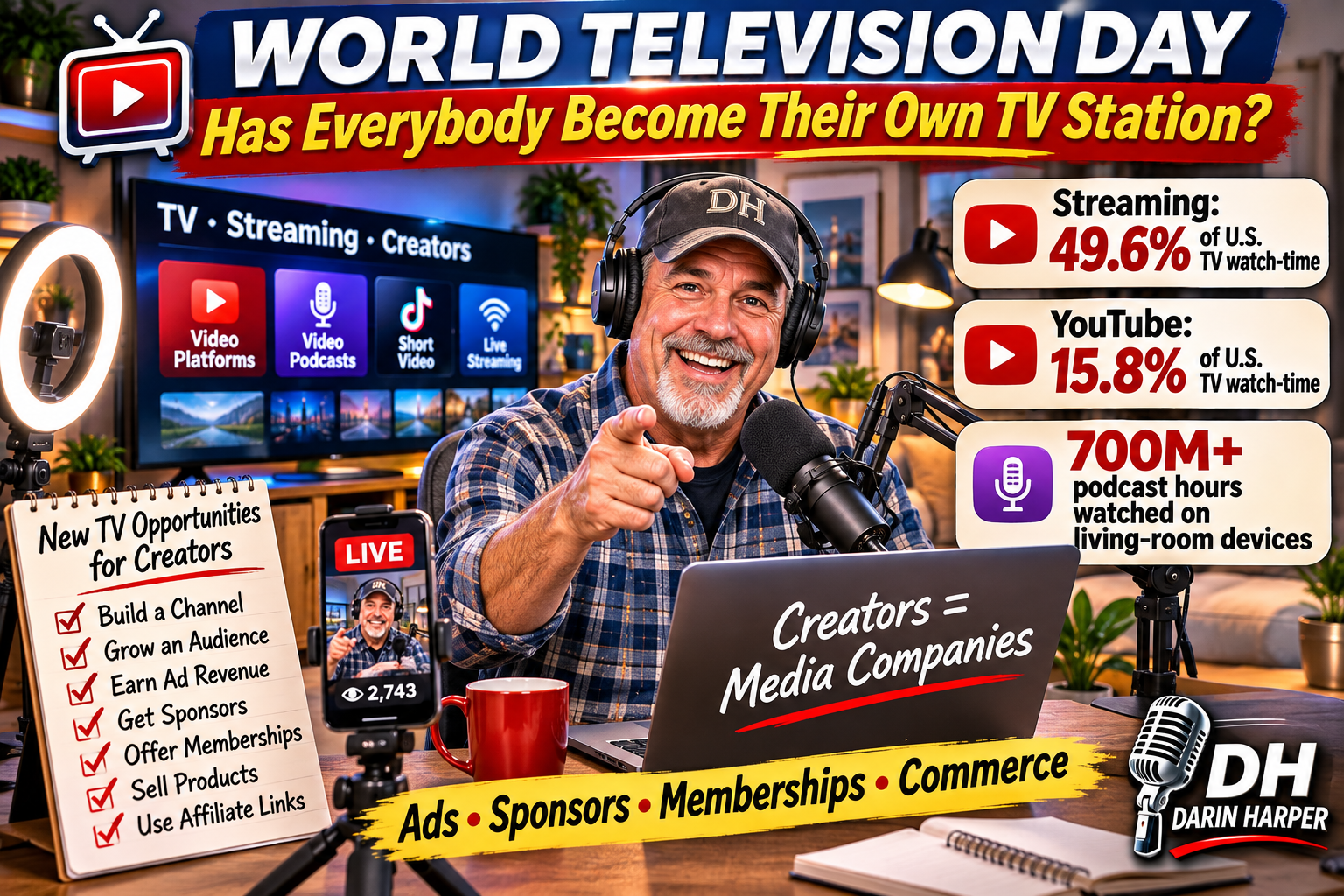
World Television Day arrives on November 21, but the funny part is that television no longer necessarily means a television network or even a television set. The United Nations created the observance in 1996 to recognize television's influence on public opinion, communication, and global culture. Thirty years later, that influence has splintered across smart TVs, phones, tablets, YouTube channels, TikTok feeds, livestreams, and video podcasts. The old model was simple: a few networks owned the studios, hired the talent, controlled the schedule, and told everyone what was on at 8 p.m. The new model is almost the opposite. If you have a camera, a microphone, editing software, and enough determination to survive the comments section, congratulations: you may already own a very small television station.
YouTube may be the clearest example of how thoroughly the line between television and internet video has disappeared. Nielsen reported that streaming represented 49.6% of total U.S. television watch-time in August 2026, while YouTube alone captured a record 15.8% - the largest share for any media distributor in Nielsen's measurement that month. YouTube also says that more than half of its top 100 creators now see the television screen as their most-watched interface. That means creators who once filmed videos for somebody holding a phone vertically on the couch are increasingly producing programs that people watch on the biggest screen in the house. The television did not die. It simply stopped caring whether the program came from Hollywood, New York, or somebody's spare bedroom.
Video podcasts make the transformation even more obvious. YouTube reported that viewers watched more than 700 million hours of podcasts on living-room devices in October 2025, up from 400 million hours a year earlier, and the platform says it has more than one billion monthly active podcast viewers. Edison Research's 2026 Podcast Consumer study found that watching and listening have essentially reached parity: 82% of weekly podcast consumers were actively watching video podcasts versus 78% listening to audio-only podcasts in the period Edison cited. In other words, the podcast that used to accompany your commute has grown cameras, lighting, graphics, clips, sponsors, and a set that suspiciously resembles a late-night talk show. The microphone is still there. It just brought a television crew with it.
TikTok has pushed the same idea in the opposite direction by starting with short mobile video and steadily expanding toward commerce, longer-form storytelling, episodic series, and creator-led entertainment. In 2026, TikTok and Amplify launched an initiative encouraging brands to work with creators on recurring programs such as interviews, game shows, docuseries, reality formats, and microdramas. TikTok also says a U.S. economic-impact study conducted by PF Global estimated that 1.8 million American entrepreneurs sold products or services through the platform in 2025 and that TikTok-related activity supported $81 billion in U.S. GDP. The exact numbers will always depend on methodology, but the larger trend is difficult to miss: a creator's video can now function simultaneously as entertainment, advertising, product demonstration, storefront, customer-acquisition tool, and television episode. That is a lot of jobs for a 60-second clip.
That creates business opportunities that would have been almost impossible for an independent producer a generation ago. A creator can earn through advertising, sponsorships, memberships, subscriptions, affiliate links, merchandise, courses, consulting, live events, personalized videos, product sales, licensing, and branded content. A successful channel can become a miniature media company with its own audience, programming schedule, production workflow, sales operation, and intellectual property. But the opportunity comes with a warning label. YouTube says more than 20 million videos are uploaded to the platform every day, which means the barrier to entry has collapsed while the competition for attention has exploded. Owning a camera is easy. Building an audience that trusts you enough to come back tomorrow is the part nobody sells in the electronics aisle.
So has everybody become their own TV station? Technically, almost anyone can. Economically, only some will turn that capability into a durable business. The creators most likely to succeed will think less like people posting random videos and more like programmers building a network: develop recognizable shows, serve a clear audience, publish consistently, repurpose content across platforms, own as much of the customer relationship as possible, and create revenue streams that do not depend on a single algorithm. That may be the perfect lesson for World Television Day. Television was never really about the box sitting in the living room. It was about storytelling, attention, influence, community, and the business built around all four. The box is still there. It just has a lot more channels now - and one of them might be yours.