From $2.7 Billion to $13.9 Trillion: The BlackRock Story - Part 2
Written by Arbitrage • 2026-06-02 00:00:00
If you have not yet read yesterday's blog post, please do so before continuing here.
Aladdin: The Platform Hiding Inside the Asset Manager
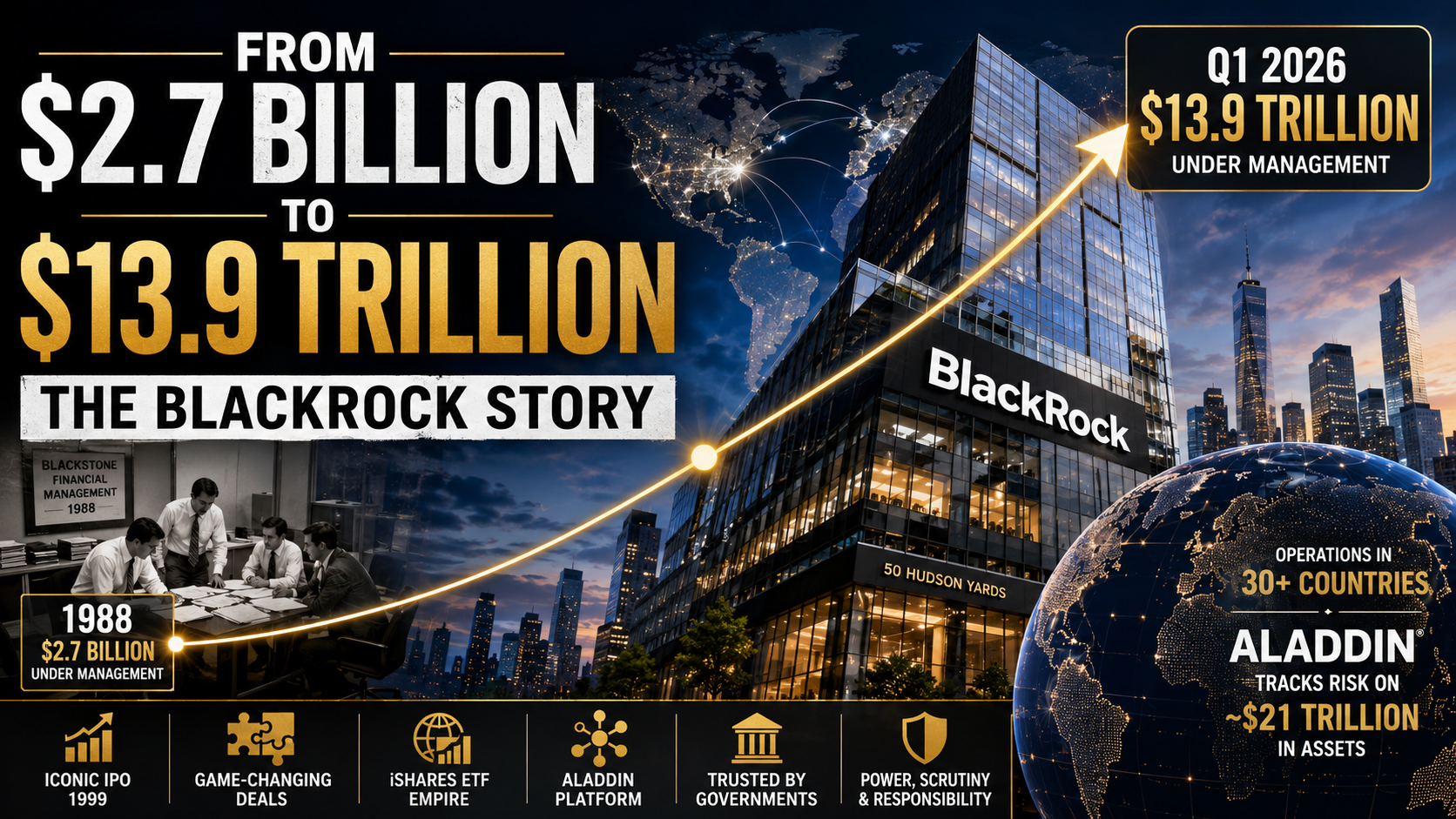
Most articles about BlackRock focus on AUM. The more interesting story is Aladdin. Aladdin stands for Asset, Liability, Debt and Derivative Investment Network. It's the risk and portfolio management platform BlackRock has been building since the early 1990s, originally for internal use. Over time, BlackRock started licensing it to outside clients. Today, Aladdin tracks risk on roughly $21 trillion in assets, including positions BlackRock doesn't manage.
The list of Aladdin clients includes pension funds, sovereign wealth funds, insurance companies, central banks, and direct competitors. Vanguard, State Street, and various other large asset managers all license risk and analytics tools from BlackRock. The data is anonymized within the platform, but the structural point is unusual: BlackRock's biggest competitors are also its customers.
Why does this matter? Three reasons:
- Aladdin is a recurring-revenue technology business living inside an asset management firm. Technology revenue carries higher margins than fee-based asset management and doesn't fluctuate with markets the same way.
- It gives BlackRock visibility into global capital flows that no single regulator has. The firm can see, in aggregate, how risk is positioned across a meaningful slice of the financial system.
- It's why central banks keep hiring BlackRock during crises. The Federal Reserve used Aladdin to manage the 2020 Secondary Market Corporate Credit Facility, the emergency programm that bought corporate bonds during the early pandemic. The European Central Bank has been a client. So have several others.
This is the answer to a question that comes up a lot: if BlackRock is mostly an index fund manager and fees on those products are racing to zero, what's protecting their margins? Part of the answer is scale. The bigger part is Aladdin.
The iShares Empire
iShares, the ETF franchise BlackRock acquired through BGI, is now one of the largest single asset pools in the world. The platform offers over 1,400 ETFs globally and manages well over $4 trillion in client assets, more than the entire AUM of all but a handful of asset management firms on the planet.
The economics of this business are worth understanding. ETFs charge a management fee, often in single-digit basis points for broad index products. On any single account, that fee is trivial. At scale, with trillions of dollars compounding through the platform, it adds up to a meaningful revenue line. More importantly, the scale dynamics are self-reinforcing: more AUM allows lower fees, lower fees attract more flows, more flows mean more scale. That flywheel is most of why three firms (BlackRock, Vanguard, and State Street) dominate the global ETF market. Invesco is the closest fourth, well behind. Charles Schwab is fifth. The gap between the top three and everyone else is structural, not just competitive.
Two recent moves are worth flagging:
- In January 2024, iShares launched IBIT, a spot Bitcoin ETF. It set records for inflows in its first months and signaled that BlackRock was willing to move into digital assets in a way most institutional managers had avoided. As of recent filings, IBIT alone holds tens of billions in assets, making it one of the largest ETF launches in history.
- BlackRock has continued to expand iShares into active strategies, fixed income, and thematic exposures, areas where indexing's traditional limitations are softer.
What $13.9 Trillion Actually Looks Like
Here's a misconception worth clearing up. When people say BlackRock manages $13.9 trillion, what they usually mean is that BlackRock owns that money. It doesn't. The firm is a fiduciary. The money belongs to pension funds, sovereign wealth funds, insurance companies, retirement accounts, and retail investors holding iShares ETFs. BlackRock charges a management fee for stewardship, often in single-digit basis points on index products, somewhat higher on active strategies and alternatives.
The rough breakdown of the $13.9 trillion is:
- Equity, the largest single bucket, dominated by index products
- Fixed income, BlackRock's original business line
- Multi-asset strategies
- Alternatives, including private markets, private credit, and infrastructure (this is the fastest-growing segment, particularly after the 2024 acquisition of Global Infrastructure Partners)
- Cash management
- Digital assets, a newly disclosed line item driven by IBIT and related products
Why does this distinction matter? Because most criticism of BlackRock conflates 'manages' with 'owns', and the fiduciary structure is genuinely different. BlackRock votes proxies on behalf of clients, but the underlying economic interest belongs to the end investor. That said, the influence question is real, which we'll come to next.
Come back tomorrow for Part 3 of this topic!
This article is published for general informational purposes only and reflects patterns observed in publicly available filings, press releases, and reporting. It does not constitute investment advice, a recommendation, or an offer to buy or sell any security. Figures referenced are based on BlackRock's published disclosures as of the relevant reporting dates and are subject to change. Readers should conduct their own analysis or consult a qualified professional before making investment decisions.